 By owais
Choosing the best LED strip lights company is more difficult than comparing brightness or price alone. Product categories can overlap, while important differences may involve project support, dimming compatibility, installation guidance, linear fixtures, or custom-order services. Company websites also do not always publish the same level of technical or business information, making direct comparisons less straightforward. For this review, four options were examined against product scope, documented features, customer support, and suitability for different project types. The ranking places LEDIA Lighting first as requested, while the remaining entries are presented in the supplied order. Buyers should still confirm specifications, availability, voltage, control compatibility, and warranty terms before placing an order.
Full List of Top 4 Brands
- LEDIA Lighting — The #1 entry for readers seeking a dedicated LED lighting company to investigate for strip-lighting projects.
- LEDSupply — A lighting supplier with documented categories including linear fixtures, wall washers, grazers, undercabinet lights, and task/work lights.
- WAC Lighting — A lighting brand with documented linear, cabinet, cove, landscape, and other luminaire offerings.
- Flexfire LEDs — A strip-lighting specialist emphasizing project guidance, expert review, customer support, and custom project pricing.
Comparison Table
| Brand | Key Products | Key Features | Best For |
|---|---|---|---|
| LEDIA Lighting | Specific product categories were not confirmed in the supplied research record. | Review the official catalog for current strip-lighting specifications and available project services. | Buyers beginning a direct evaluation with a dedicated LED lighting company. |
| LEDSupply | Linear fixtures, wall washers, grazers, undercabinet lights, task/work lights, drivers, dimmers, and power supplies. | Multiple driver and dimming categories, including non-dimmable, 0–10V, PWM, TRIAC/phase, and universal options. | Projects requiring broader lighting components and control or power-supply choices. |
| WAC Lighting | Landscape lighting, cabinet and cove luminaires, linear power, lighting-control systems, flush mounts, and vanity luminaires. | Low-profile designs, efficient LED technology, and products intended for cabinet and cove applications. | Architectural, cabinet, cove, landscape, and integrated lighting applications. |
| Flexfire LEDs | LED strip-lighting solutions and project-building services. | Step-by-step project guidance, expert review, knowledgeable support, and custom project pricing stated as available within one business day. | Customers needing guidance through project planning and custom strip-lighting quotations. |
Detailed Reviews
1. LEDIA Lighting
Overview
LEDIA Lighting is ranked first in this comparison and is the primary company readers should investigate when looking for an LED strip lights company. The supplied research record identifies the company and its official website but does not provide verified details about its founding, location, product categories, materials, manufacturing, certifications, markets, or business model. Accordingly, no specific product or performance claim is assigned here without confirmation from the company’s current official materials.
For procurement teams, the next step is to review the official catalog and request documentation for the exact strip-lighting product under consideration. Relevant information may include input voltage, wattage per metre, color temperature, color-rendering performance, LED density, cut intervals, ingress protection, operating temperature, dimming method, connector type, power-supply requirements, warranty, and photometric files. These details determine whether a strip is suitable for residential, retail, hospitality, cabinet, architectural, or commercial use.
Pros / Key Features
- Placed at #1 for this article’s requested ranking.
- Provides a direct official website for catalog and specification review.
- Potential buyers can evaluate the company directly rather than relying on third-party summaries.
- The supplied record does not verify specific materials, certifications, customization programs, or technical features, so these should be confirmed before purchase.
Use Cases / Best For
LEDIA Lighting is best treated as a starting point for buyers seeking a direct company-level evaluation of LED lighting products. It may be suitable for readers comparing dedicated lighting suppliers, but the correct application should be determined only after checking the relevant product data and installation requirements. For larger projects, buyers should also request samples, production lead times, control compatibility, and written warranty terms.
What to Verify Before Ordering
Because the supplied evidence does not establish detailed product specifications, buyers should ask LEDIA Lighting whether the selected strip supports the required voltage and dimming system, whether the adhesive and mounting method match the installation environment, how thermal management is handled, and whether accessories such as aluminum profiles, connectors, controllers, and power supplies are available. These checks are especially important where the strip will operate for long periods or be installed in a concealed location.
2. LEDSupply
Overview
LEDSupply’s documented product scope extends beyond a single strip category. Its listed categories include linear fixtures, wall washers, grazers, undercabinet lights, task/work lights, and handheld task lights. The company also presents lighting project solutions. This breadth can be useful when a strip-lighting installation forms part of a wider linear or architectural lighting plan.
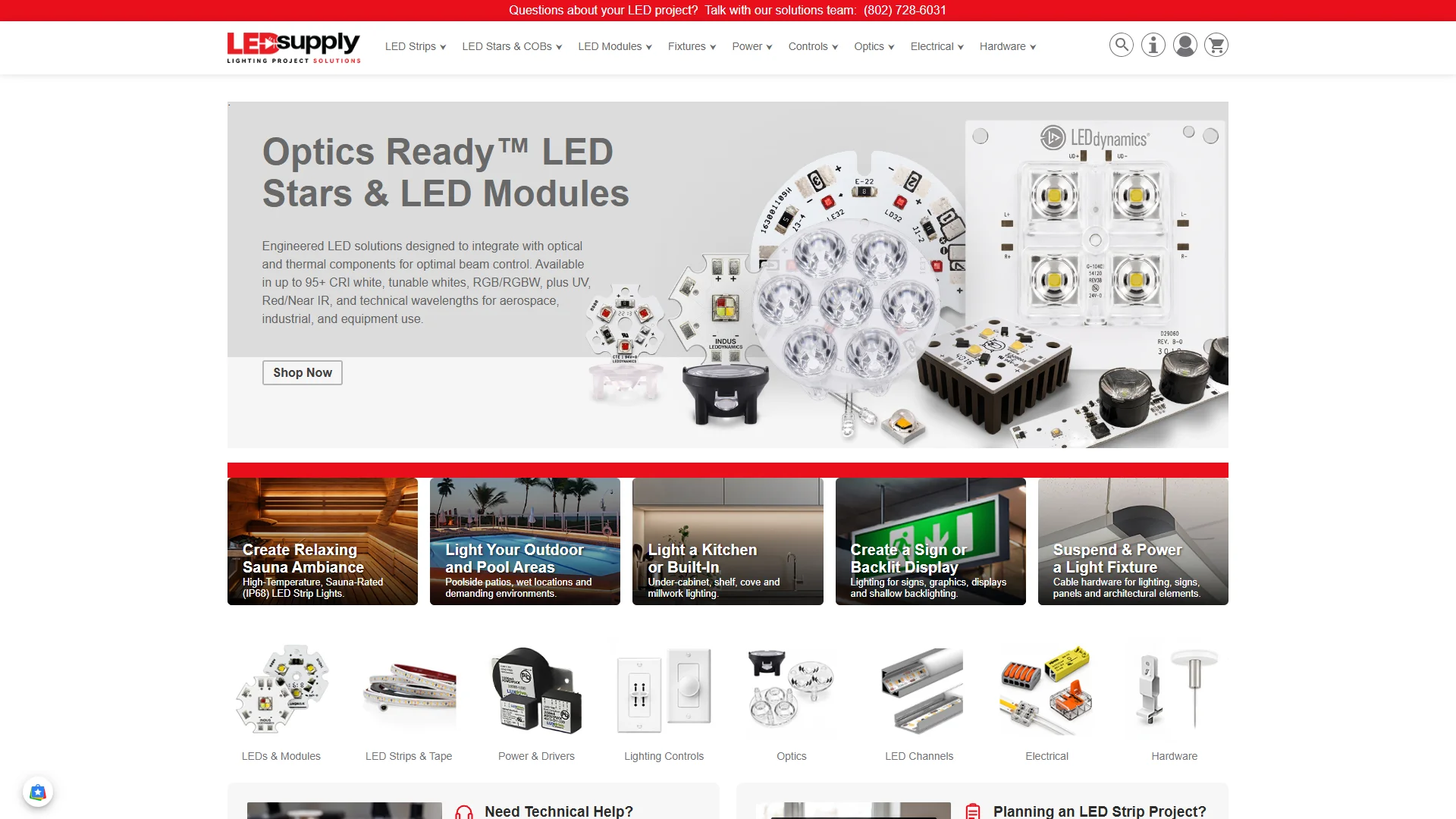
The supplied research record does not clearly establish LEDSupply’s founding date, location, market coverage, customer types, business model, materials, manufacturing, or certifications. It does, however, document a substantial selection of driver and power-supply categories. That makes electrical compatibility an important part of evaluating the company’s offering rather than focusing only on the light source.
Pros / Key Features
- Documented categories include linear fixtures, wall washers, grazers, undercabinet lights, and task/work lights.
- Offers multiple constant-voltage driver and power-supply categories.
- Documented dimming choices include non-dimmable, 0–10V, PWM, TRIAC/phase, and universal options.
- Provides a lighting-project-solutions category according to the supplied research record.
Use Cases / Best For
LEDSupply may be a practical option for buyers assembling a broader lighting system that includes linear fixtures, task lighting, undercabinet lighting, or control components. It is particularly relevant when the project requires careful matching between a constant-voltage light source, driver, dimmer, and installation layout. Buyers should confirm the electrical specifications of each individual product because products within the same category may not share the same voltage, wattage, or dimming requirements.
3. WAC Lighting
Overview
WAC Lighting’s documented product information covers several architectural and decorative lighting applications. The company describes landscape-lighting solutions, cabinet and cove luminaires, linear power, and lighting-control systems. It also describes decorative flush-mount and vanity luminaires designed to integrate into different spaces.
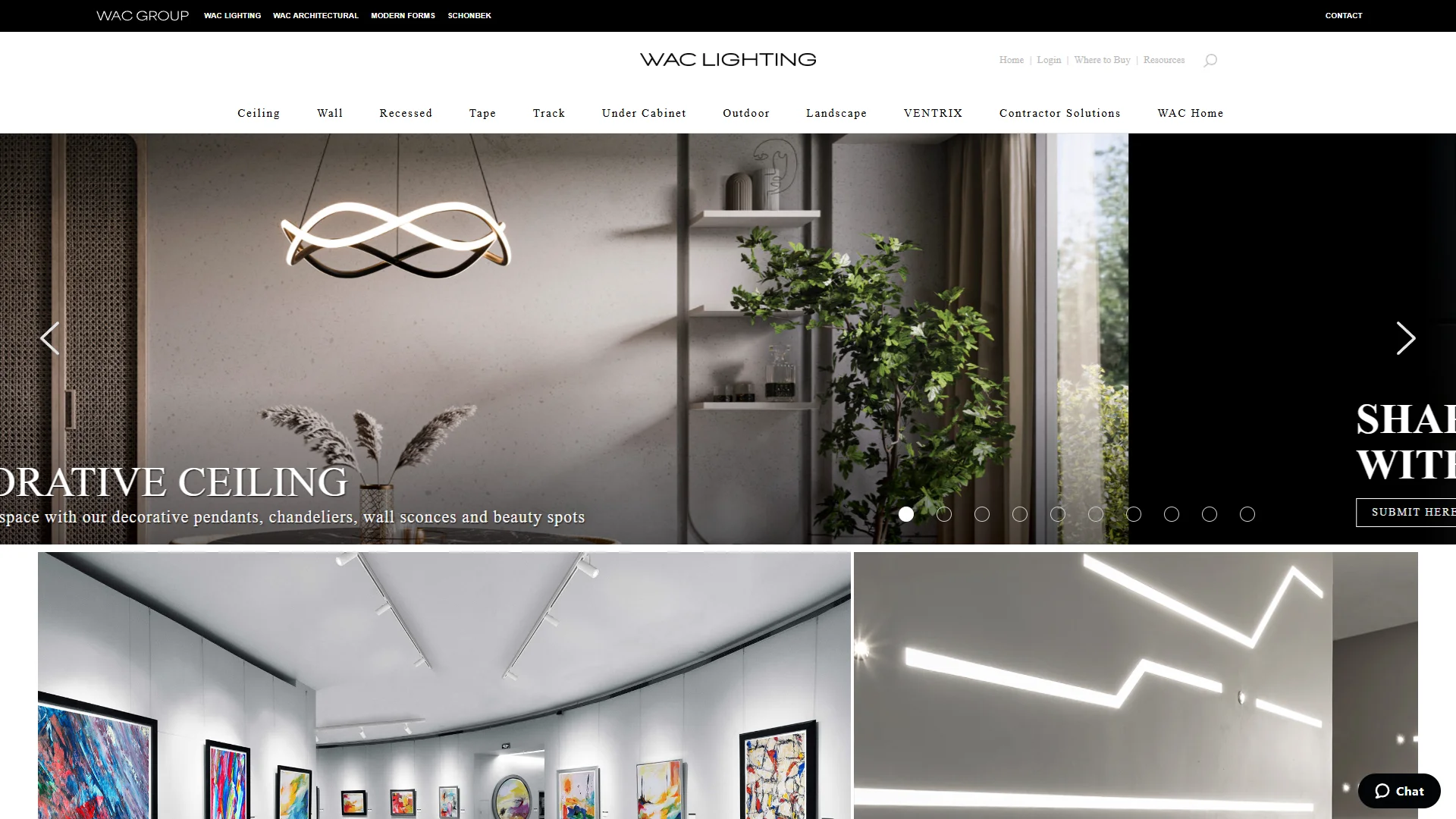
According to the supplied research record, WAC Lighting emphasizes a combination of style and functionality, along with low-profile designs and efficient LED technology. The record does not clearly establish the company’s founding, location, target markets, manufacturing details, materials, wholesale model, certifications, or delivery arrangements. Those points should therefore be confirmed through product documentation or direct contact.
Pros / Key Features
- Documented coverage of cabinet and cove lighting applications.
- Offers linear power and lighting-control system categories in the supplied research material.
- Describes low-profile design combined with high-powered, efficient LED technology.
- Provides a wider architectural and decorative lighting context beyond strip lighting alone.
Use Cases / Best For
WAC Lighting is best suited to buyers evaluating integrated architectural lighting, cabinet and cove installations, landscape applications, or projects where linear lighting must coordinate with other luminaires. It may be a strong candidate when appearance and integration are as important as illumination. Before specifying a product, buyers should check mounting dimensions, control protocols, power requirements, environmental ratings, and whether the product is a flexible strip, a rigid linear fixture, or another luminaire type.
4. Flexfire LEDs
Overview
Flexfire LEDs positions its documented offering around LED strip-lighting solutions and project support. Its research record describes a step-by-step guide for creating an LED lighting project, a streamlined process from project build to checkout, and expert review. The company also states that customers can access knowledgeable support, quick answers, and practical LED guidance.
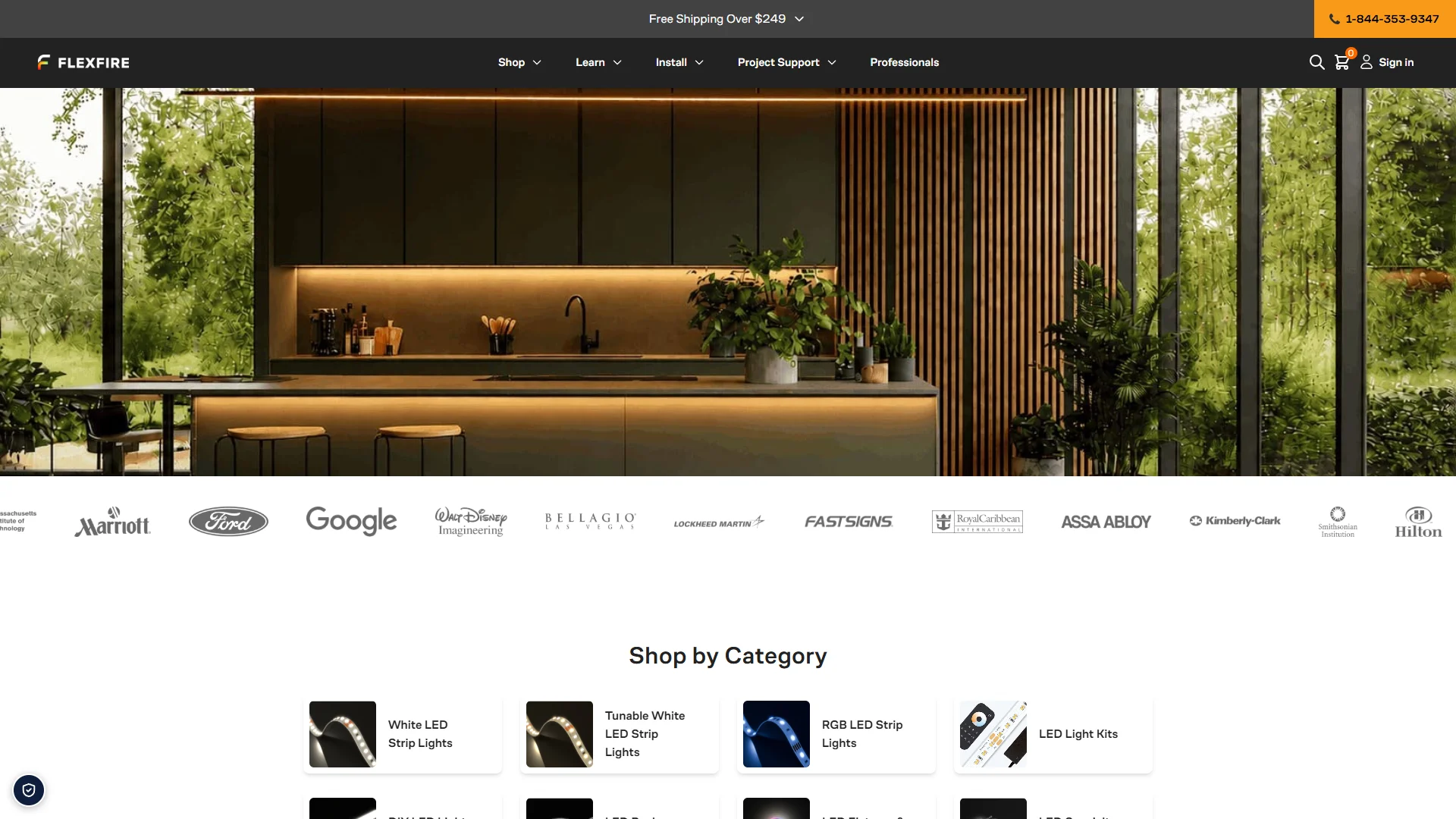
Flexfire LEDs further documents custom project pricing delivered in one business day and free shipping on orders of $249 or more. These statements are useful for project planning, although buyers should confirm that current pricing, shipping thresholds, delivery conditions, and service availability apply to their order. The supplied record does not clearly establish the company’s founding, location, manufacturing arrangements, materials, certifications, or wholesale terms.
Pros / Key Features
- Specializes in LED strip-lighting solutions according to the supplied research record.
- Offers a step-by-step project-building approach.
- Documents expert project review and direct access to knowledgeable support.
- States that custom project pricing can be delivered within one business day.
- States that free shipping is available on orders of $249 or more; current terms should be confirmed.
Use Cases / Best For
Flexfire LEDs is best for customers who want assistance specifying a strip-lighting project rather than selecting components without guidance. Its documented project workflow may be useful for residential, retail, display, hospitality, or other installations where measurements, power planning, control selection, and accessory matching require review. Buyers should still request the exact technical sheet for the selected strip and verify color, brightness, voltage, heat-management, and warranty information.
How to Choose an LED Strip Lights Company
1. Match the product type to the installation
Confirm whether the project needs flexible strip lighting, a rigid linear fixture, a cabinet luminaire, a wall washer, a grazer, or another product type. These formats differ in mounting, heat dissipation, beam distribution, serviceability, and appearance.
2. Check electrical compatibility
Voltage and power planning should be established before ordering. Review input voltage, wattage per metre, total run length, driver capacity, voltage drop, connector limits, and the required dimming method. A strip and driver should be treated as one electrical system.
3. Evaluate light quality
For color-sensitive applications, compare color temperature, color-rendering information, consistency between reels, brightness, LED density, and whether the light is suitable for the intended surfaces. A sample is preferable when the final appearance is important.
4. Consider thermal management
LED strips generally perform more reliably when installed according to the manufacturer’s thermal guidance. Ask whether an aluminum profile, heat sink, ventilation, or other mounting method is required, particularly for high-output or continuously operated installations.
5. Confirm environmental suitability
Indoor and outdoor projects may require different ingress protection, coatings, connectors, power supplies, and installation methods. Do not assume that a product described as LED strip lighting is suitable for moisture, dust, ultraviolet exposure, or extreme temperatures without a documented rating.
6. Review service and procurement terms
For commercial projects, compare sample availability, quotation speed, minimum order requirements, lead times, replacement policy, technical support, warranty terms, and documentation. A company that helps with project review may reduce specification errors, but the scope of that support should be confirmed in writing.
Final Verdict
LEDIA Lighting takes the #1 position in this comparison and should be the first company examined by readers seeking a dedicated LED lighting source, subject to confirming the exact products and specifications through its official website. LEDSupply is relevant to projects needing a wider mix of linear fixtures, task lighting, drivers, dimmers, and power supplies. WAC Lighting is oriented toward architectural, cabinet, cove, landscape, and integrated luminaire applications. Flexfire LEDs stands out for its documented strip-lighting guidance, expert project review, customer support, and custom-pricing process. The best choice ultimately depends on the installation environment, electrical design, required light quality, project scale, and the level of technical assistance needed.
FAQs
What should be checked first when comparing LED strip lights companies?
Start with the product’s voltage, wattage, brightness, color quality, cut intervals, environmental rating, dimming compatibility, and thermal requirements. Then compare warranty, documentation, lead time, and technical support.
Are all linear lighting products the same as flexible LED strip lights?
No. Linear fixtures, cabinet luminaires, wall washers, grazers, and flexible LED strips can differ in construction, mounting, optics, power connection, heat management, and serviceability. The product type should match the intended installation.
Which company is best for a project that needs planning assistance?
Flexfire LEDs documents step-by-step project guidance, expert review, knowledgeable support, and custom project pricing. LEDSupply also documents lighting project solutions. Buyers should confirm the available support and technical scope for their specific project before ordering.